
Material Notes / Material Selection
Dyed Veneer vs. Natural Veneer: Which Is Better for Color Consistency?
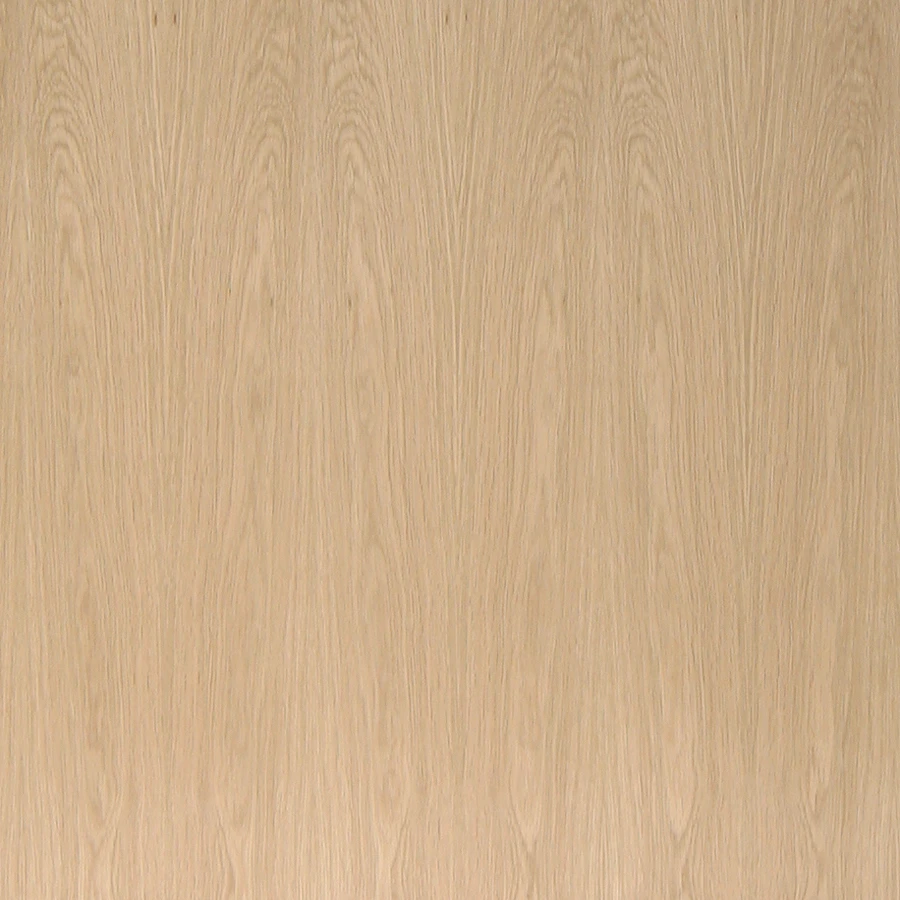
Natural White OakStraight Cut · Crown Grain
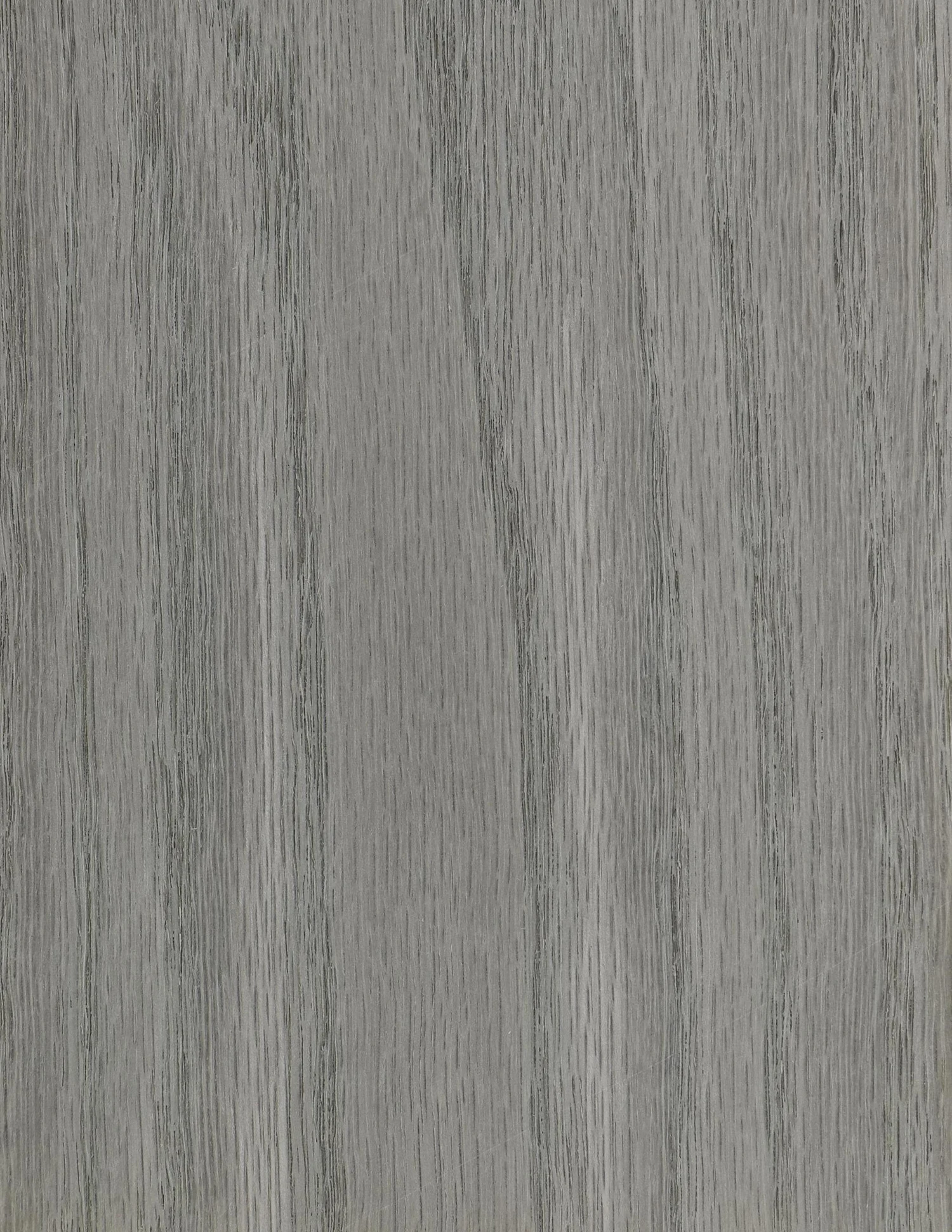
Dyed OakWhite Oak · Grey · 028-001
Choosing wood veneer for a single cabinet is one thing. Coordinating its color across a hotel lobby, a series of doors or an entire furniture collection is another.
For designers and procurement teams, the question is practical: will the finished surfaces look consistent when installed together?
Dyed veneer is generally the stronger starting point when a coordinated color palette is the priority. Natural veneer is often the better choice when the design celebrates the original tones and variation of a wood species. However, neither material should be specified on color alone. Grain selection, veneer matching, finishing and sample approval all influence the final result.
What Is the Difference Between Dyed and Natural Veneer?
Natural veneer is a thin layer of real wood selected for its species, grain and figure. Its appearance reflects the characteristics of the tree, including differences in tone between individual leaves and logs.
Explore KOSEE’s Natural Veneer collection when the original character of the wood is central to your design.
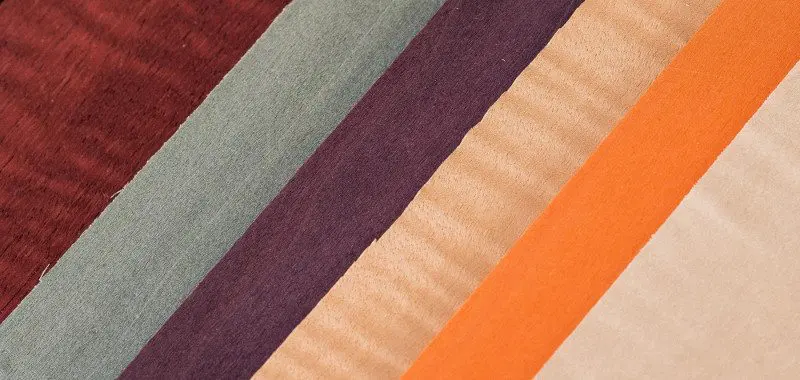
Dyed veneer is real wood veneer treated with color while retaining its visible grain. The treatment gives designers more scope to work with a selected palette, including tones beyond the wood’s original appearance.
Explore KOSEE’s Dyed Veneer collection when color coordination is an important part of the specification.
The distinction is between the wood’s original color and an intentionally developed color—not between real wood and an artificial surface.
Which Offers Better Color Consistency?
Dyed veneer can make it easier to coordinate a target tone across multiple surfaces. This is useful when wall panels, cabinetry and furniture need to work within the same interior palette.
However, “consistent” does not mean every veneer leaf looks identical. Grain, figure and differences in the underlying wood can remain visible after dyeing. Production batches and the finishing process also need to be considered.
Natural veneer has a wider range of inherent tonal variation. Two leaves from the same species can differ in warmth, brightness or grain contrast. Carefully selected and matched natural veneer can still create a cohesive installation, but the specification should allow for an agreed range of appearance.
A useful purchasing question is therefore: how much variation can the project accept? A quiet, coordinated interior may call for tighter selection than a design that deliberately highlights the individuality of wood.
Why Does Dye Penetration Depth Matter?
Color consistency also has a physical dimension: how far the color extends into the veneer.
Some dyed veneers are colored through their full thickness. Others may have a different penetration profile, depending on the material and treatment. This matters when the veneer will be sanded, trimmed or used in details that expose its edge.
Do not assume that “dyed veneer” automatically means full-depth coloration. Ask the supplier to confirm penetration depth for the selected product and review a cut-edge sample if the detail requires it.
Even with through-dyed veneer, sanding must stay within the material’s working limits. Color penetration does not prevent sanding through the veneer into the substrate.
Natural veneer has no applied dye penetration to assess unless it receives an additional coloring treatment. Its finished appearance still depends on the preparation and coating system.


Does Dyed Veneer Eliminate Natural Variation?
No. Dyeing changes the color of wood; it does not remove its structure.
Grain direction, pores and figure continue to shape how the surface looks. Adjacent panels may appear lighter or darker as the viewing angle changes, even when their base color is closely coordinated.
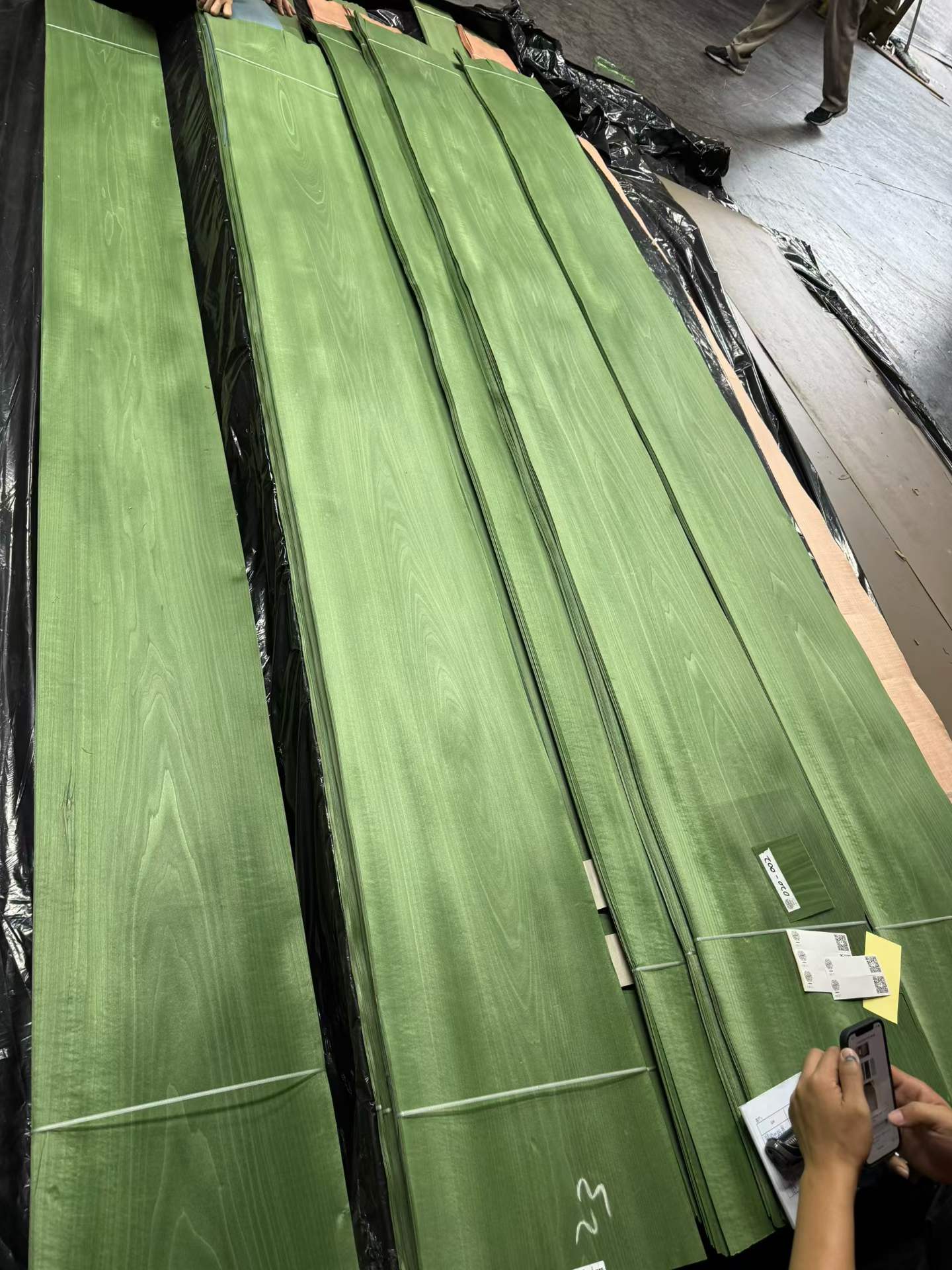
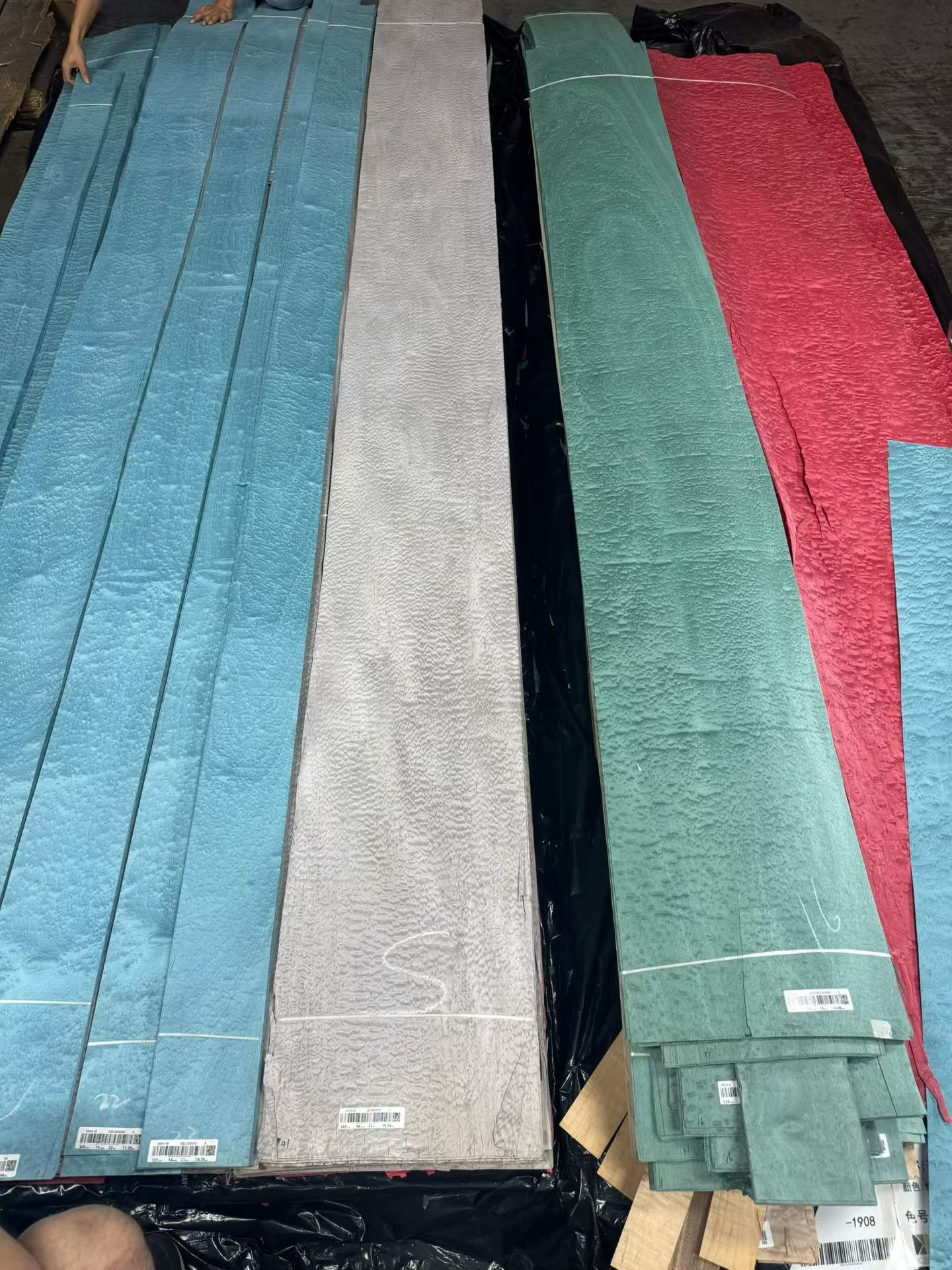
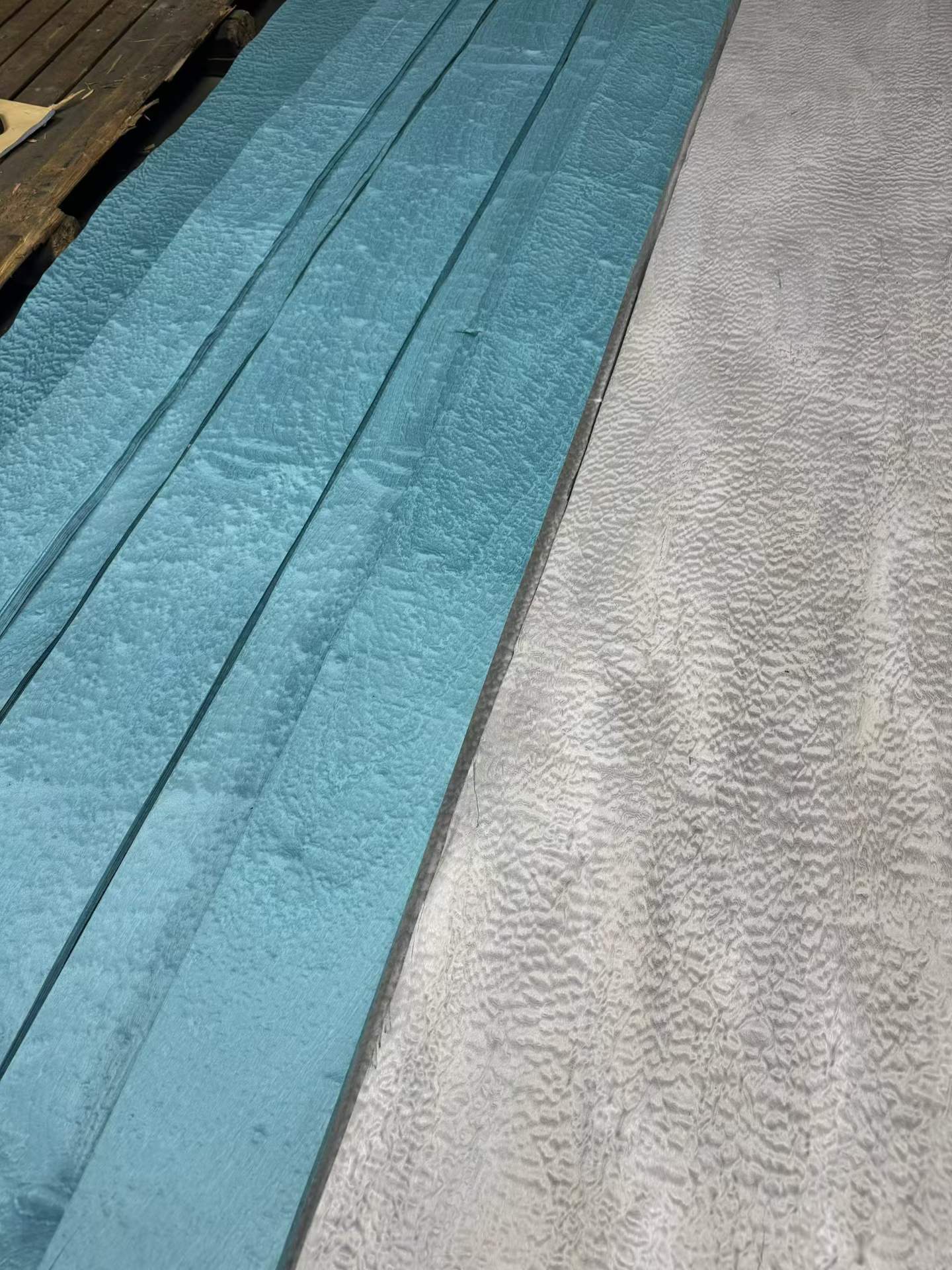
The veneer layout also matters. Book matching, slip matching and other arrangements create different visual rhythms. Discuss the intended matching method alongside the color reference, especially for large walls or repeated panels.
Both natural and dyed veneer should be reviewed with the proposed finish. A sample approved unfinished may look different after coating. Evaluate finished samples under lighting representative of the actual space.
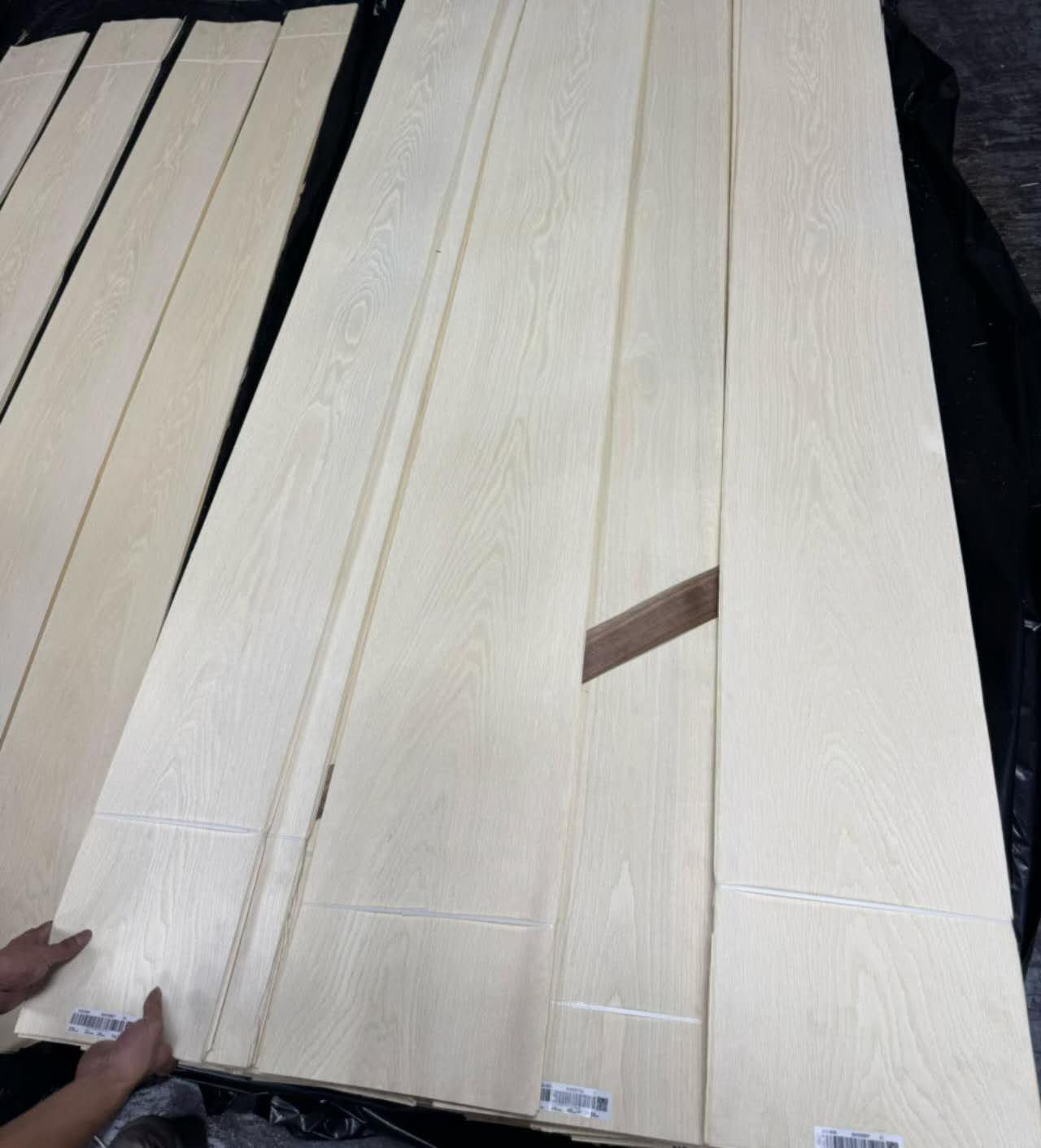
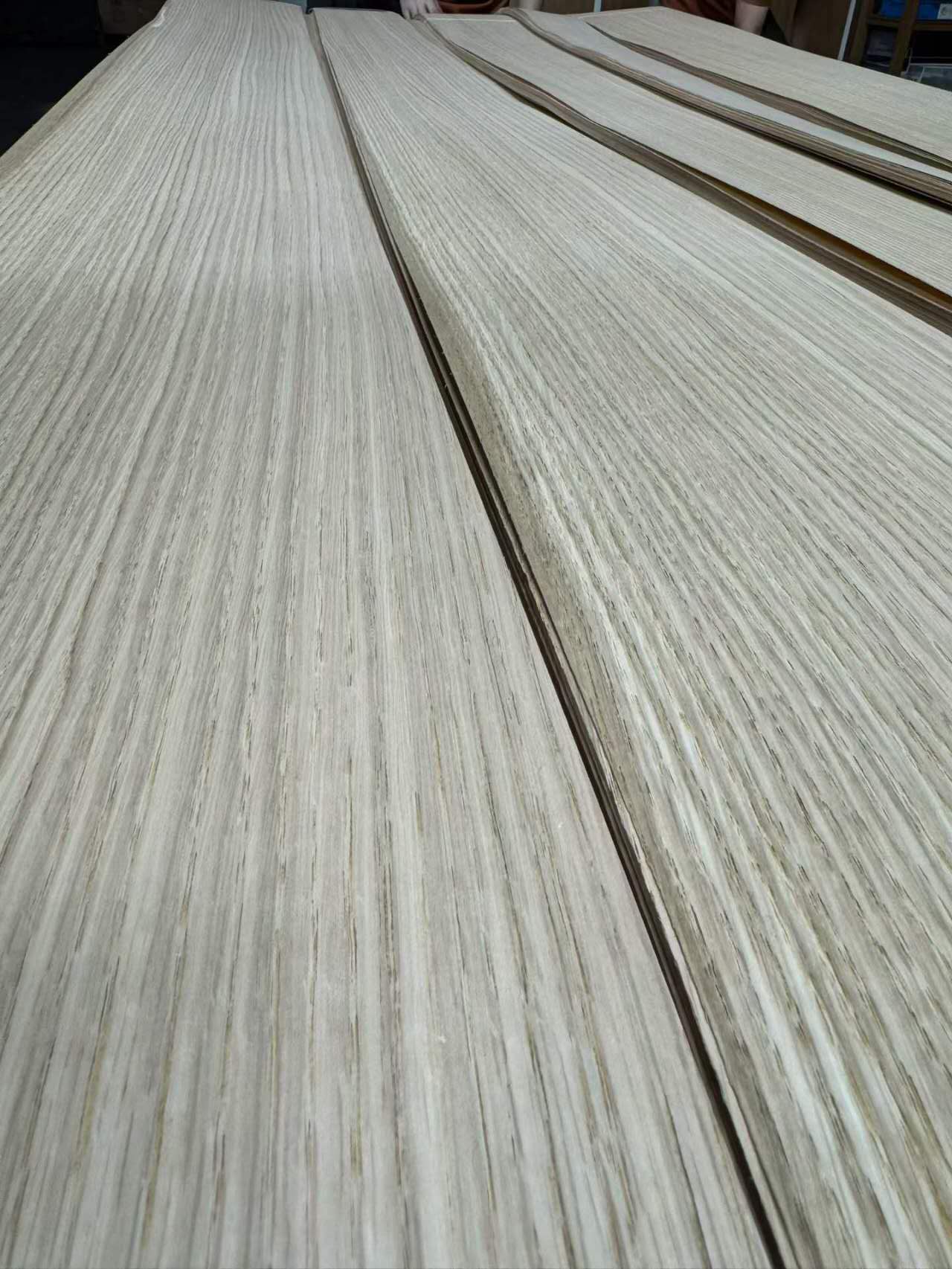
Which Material Suits Your Project?
Consider dyed veneer when:
- A defined color palette needs to carry across several interior elements.
- Repeated panels or furniture components require coordinated tones.
- The design calls for a color while keeping visible wood grain.
Consider natural veneer when:
- The original tone and character of the species are key design features.
- Variation between leaves contributes to the intended appearance.
- The project can accommodate careful selection and matching within an approved range.
For either option, tell the supplier the application, approximate quantity, panel dimensions and acceptable variation. Discuss batch coordination and any future replacement needs before ordering.
Compare Finished Samples Before You Decide
Start with natural and dyed veneer samples that are relevant to the same project. Where possible, compare similar grain or species references so that you can judge color separately from texture.
Review more than one piece, apply the intended finish and place the samples beside neighboring materials. For a large installation, consider a larger mock-up to assess panel relationships.
The best choice is the material that meets your design intent within a clearly agreed range of variation.
Begin with samples
Compare the materials in person.
Request natural and dyed veneer samples for your project.
Request Samples ↗Include your target color, application and finishing requirements so KOSEE can review suitable sample options.