
Material Notes / Species & Origins
Sapele Veneer: African Origins, Pommele Figure and Design
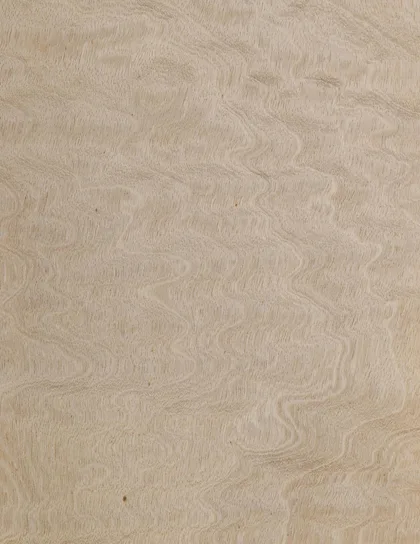
A cabinet front can look quiet from across a room and become the most engaging surface when someone approaches it. For a designer, that change of scale is useful: a material can support the overall composition while rewarding a closer look. Figured sapele veneer offers a starting point for this kind of design. One selection is pommele sapele, listed as Pommele Sapele in KOSEE’s material library. The Chinese catalog name is Qiu Sha. [8]
Understanding it begins with three different questions: what tree produced the wood, what pattern the veneer reveals, and what color the finished surface carries. Those questions connect African forest origins to furniture and interior design without treating a commercial material name as a complete description of a product.
Choose a pommele sapele swatch

Where sapele comes from
Sapele is the timber name associated with Entandrophragma cylindricum, a species in the Meliaceae family. Kew describes its native range as western tropical Africa to Uganda, primarily in wet tropical environments. This places the tree within an African forest context while leaving the harvest location of a particular shipment to its own sourcing records. [1]
Regional names add another layer to the story. World Agroforestry records both Sapele and Muyovu, and describes the tree in Ugandan tropical forests. A botanical name provides a useful reference when names change between languages, catalogs and trading regions. It also helps keep the identity of the species separate from an appearance term such as pommele. [2]
For a project, keep three locations distinct: the species’ native range, the actual timber’s harvest country and the veneer’s manufacturing location. KOSEE describes importing wood for processing in China and providing specific origin documentation for applicable projects. A material brief can record these details separately, making it easier to connect the design selection with the supplied batch. [3]
Origin is therefore part of a material’s identity, rather than a shortcut to predicting its exact appearance. For the designer, the next question is how a selected log becomes a visible surface. Grain, cutting and selection explain much more about the face of a cabinet than a country name printed on its own.
Ribbon stripe and pommele: one species, different expressions
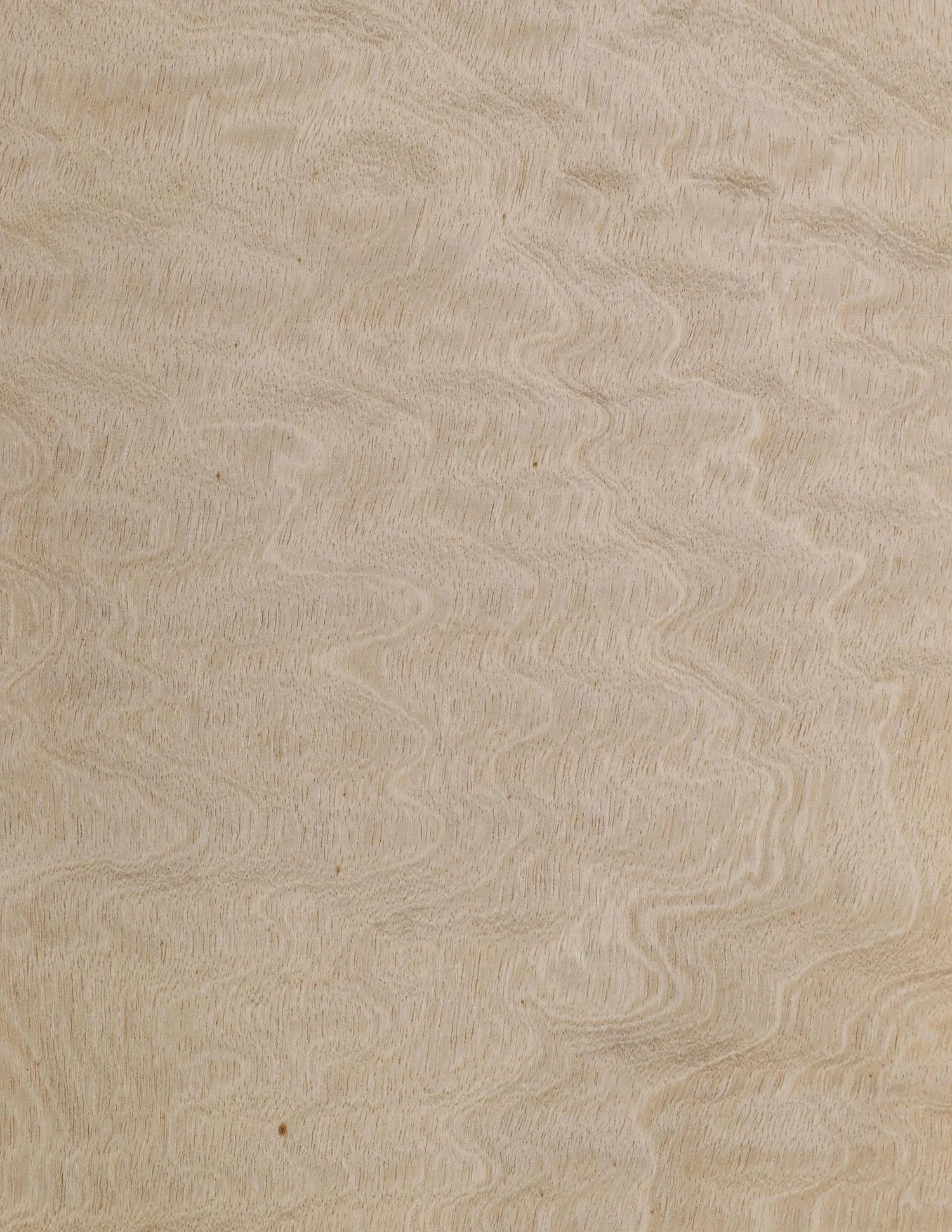
Sapele heartwood commonly ranges from reddish to purplish brown. Its interlocked grain can produce a pronounced ribbon stripe when quarter sliced. In this context, grain describes the direction of the wood fibers, while figure describes the visible pattern on the face. The distinction helps explain why two veneers from the same species can have very different visual character. [4]
Pommele describes a rounded, blister-like figure associated with variations in the wood’s growth structure. BOTRA links this appearance to irregular fiber growth and describes rotary cutting as a way to reveal it effectively. The practical implication is that the log must contain suitable figure: specifying rotary-cut sapele alone does not guarantee a pommele surface. Select the figure as well as the cutting method. [10]
For interior composition, a striped selection suggests direction. It can reinforce the height of a door or the length of a cabinet run. Pommele creates a more distributed pattern, encouraging the eye to explore small changes across the surface. Choose between these effects according to the role of the piece: a long run of storage may call for rhythm, while a freestanding cabinet may benefit from a more concentrated area of interest.
Visual depth can also exist on a smooth face. Roser’s pommele sapele reference lists a smooth surface alongside its figured structure. This makes it useful to distinguish the appearance of the grain from tactile relief. When a design calls for both, review the wood figure and any proposed surface texturing as separate choices, then assess them together on a sample. [5]
How making preserves the material’s character
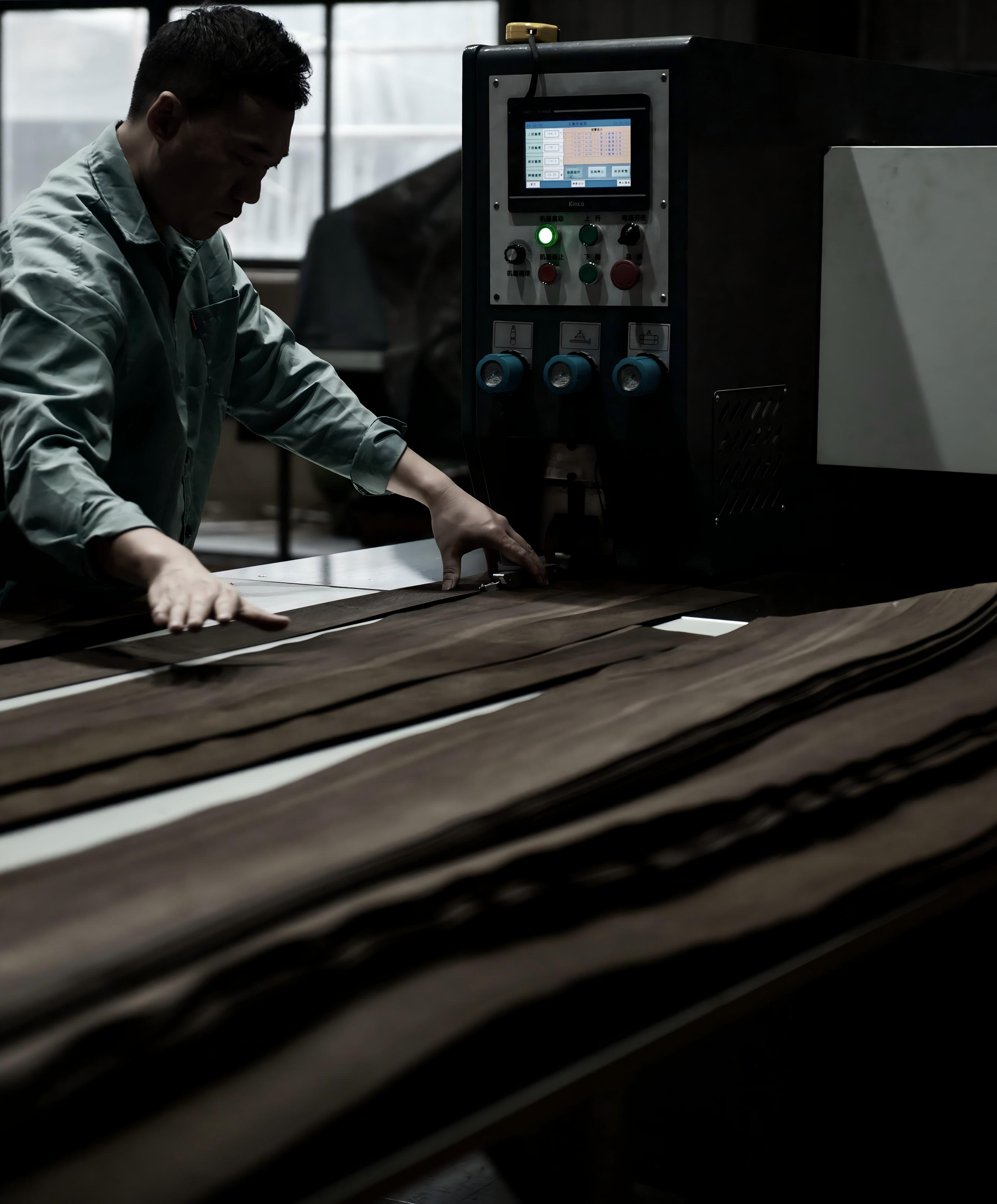
Veneer making translates a log into a sequence of thin wood surfaces. KOSEE’s published process includes conditioning, cutting, drying, trimming and grading. Each stage sits between the original tree and the material a designer receives. A cutting description helps explain the grain direction, but it does not by itself specify the final panel, backing or coating. [3]
For figured sapele, preserving the intended appearance matters as much as naming the species. Fritz Kohl notes that irregular fiber direction can make a smooth surface harder to achieve. Review a sample made with the proposed finish, checking the clarity of the figure, surface feel and sheen. Comparing it under the project lighting helps turn an attractive raw veneer into a considered interior material. [6]
Design ideas for furniture and brand interiors
A useful approach is to give figured veneer a defined role. On a freestanding cabinet, a pair of doors can carry the expressive grain while a simpler surrounding frame provides a visual pause. In a dressing area, the same principle can distinguish a central storage piece from adjacent wardrobe fronts. Decide which face should attract attention before extending the material to its sides and surrounding panels.
Sapele is used in furniture, cabinetry and wall paneling. [7] For a fashion store, consider a small accessory cabinet or consultation desk as a focal element. An expressive wood face can frame the product display, while quieter surrounding surfaces leave room for garments and changing collections. This approach also lets the designer relate the veneer to upholstery, display hardware and the store’s broader color palette.
Plan the layout across the complete cabinet elevation. Book matching turns successive leaves over to create mirrored pairs; slip matching places them alongside one another to repeat the grain. [11] Compare these arrangements with the proposed door joints and handle positions. A symmetrical layout may suit a central cabinet, while a repeating pattern may suit a longer run. Review an assembled sample, since a single close-up cannot show how the complete composition will read.
Dyed sapele connects wood figure with a color palette
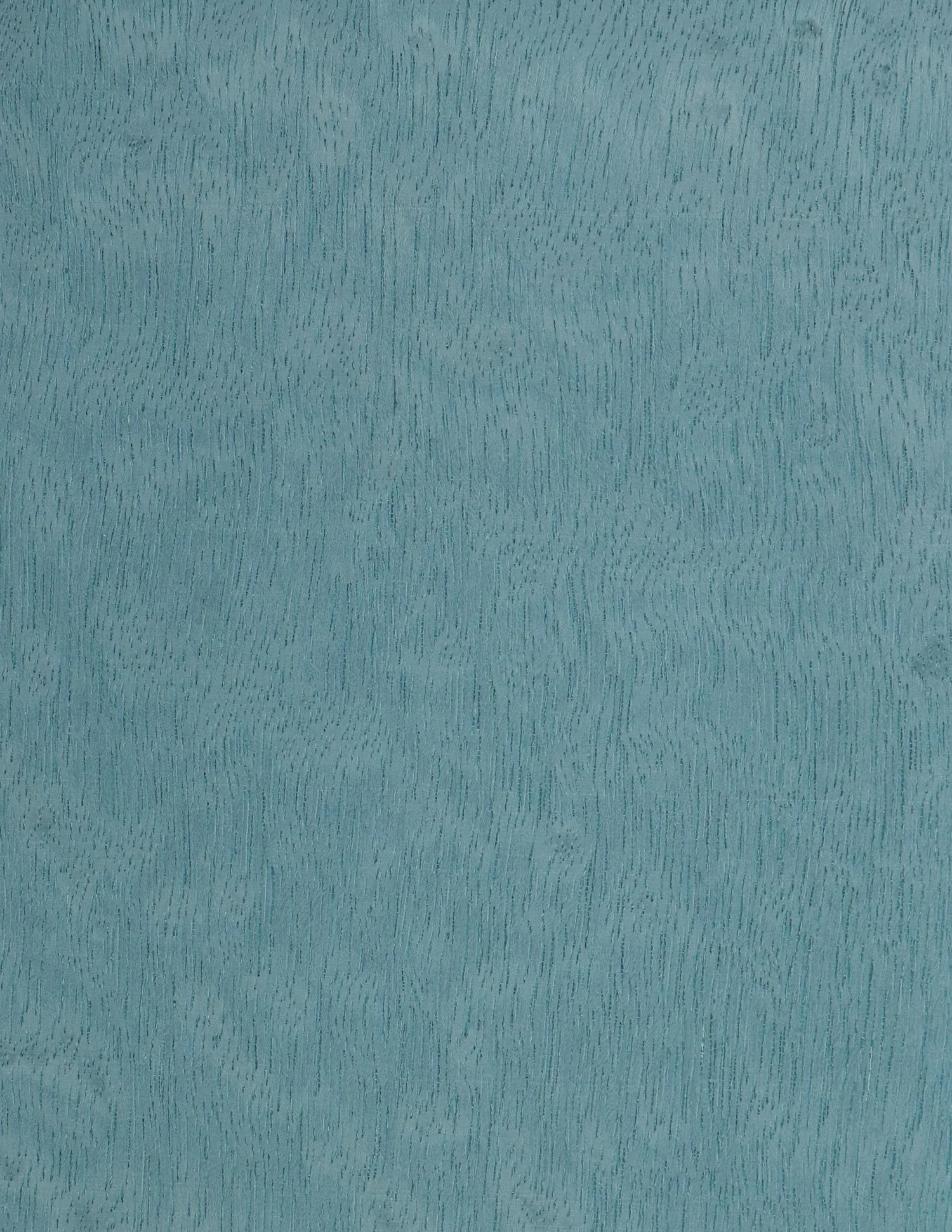
KOSEE’s material library lists Pommele Sapele in Beige Brown, reference 019-001, and Blue Green, reference 019-1908. Both are identified as dyed, rotary-cut veneer with pommele figure. These are two distinct product references. Their color names describe the supplied color direction, while their shared species and figure connect them within the same material family. [8]
This opens a useful design conversation: should the wood sit close to the surrounding warm neutrals, or introduce a cooler accent? A muted cabinet face and a colored display element can use related material language while serving different roles. Judge the actual sample alongside fabrics, metalwork and the intended lighting, because the screen image cannot settle the final color relationship.
Begin with a species, then define the surface
To develop a sapele veneer concept with KOSEE, share the intended furniture or interior application, a drawing or approximate panel sizes, and your preferred figure and color reference. Ask for physical samples and discuss the veneer format, backing and finish needed for that use. Confirm the selected batch’s origin through the applicable documents. A clear design brief gives the material discussion a useful starting point.
Choose a sample from this article
Compare more dyed wood veneer samples
View KOSEE manufacturing capabilities
Browse KOSEE catalogs and material resources
Sources
- Kew Science: Entandrophragma cylindricum
- World Agroforestry: Entandrophragma cylindricum (Uganda)
- KOSEE: Capabilities
- Columbia Forest Products: Pommele Sapele Veneer
- Roser: Sapele Pommele
- Fritz Kohl: Sapele
- Dooge Veneers: Pommele Sapele
- KOSEE: Materials and public material records
- KOSEE: Resources
- BOTRA: Figured woods - Sapele pommele
- TVAA: Methods of assembling