
Material Notes / Cross-disciplinary Design
From Kuba Textiles to Wood Veneer: The Lost Cloth Object
A textile designer begins with relationships: a line against a field, a repeated shape, a change of scale. A furniture designer can ask the same questions of wood veneer. The Lost Cloth Object, developed by Stephen Burks Man Made with ALPI for Design Miami 2025, offers a concrete example of that exchange. It translates Kuba textile traditions from the Democratic Republic of the Congo into a contemporary wood installation. [1]
For architects and brand-space designers, the useful question is how a surface becomes part of an object’s identity. This case connects material, pattern and three-dimensional form. It also suggests ways to develop an original veneer scheme for a boutique, furniture collection or exhibition, while giving clear credit to the cultural tradition that prompted the design.
ALPI and KOSEE samples for your own pattern study
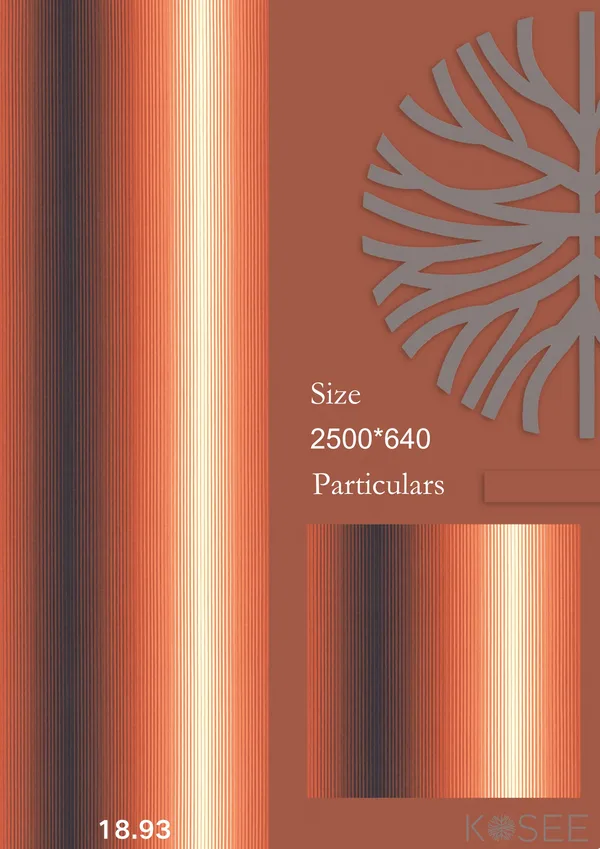
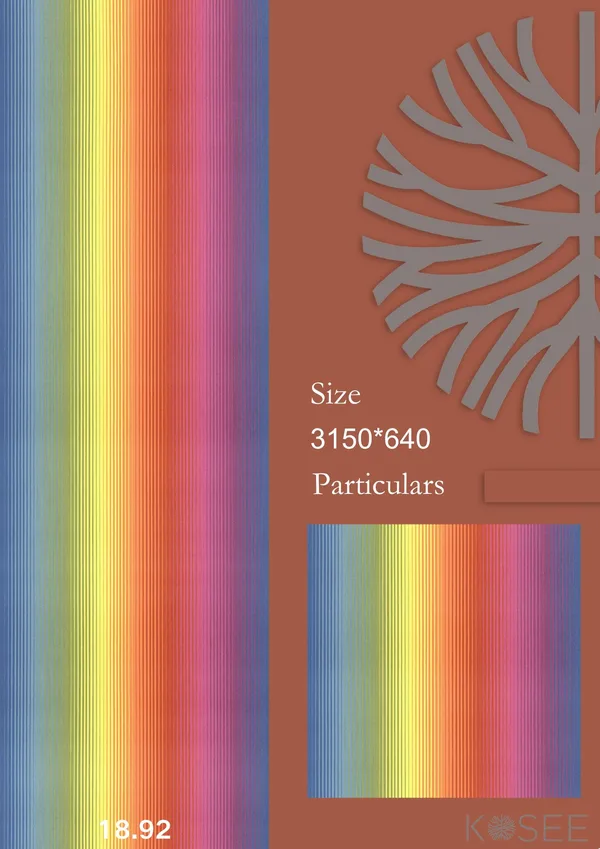
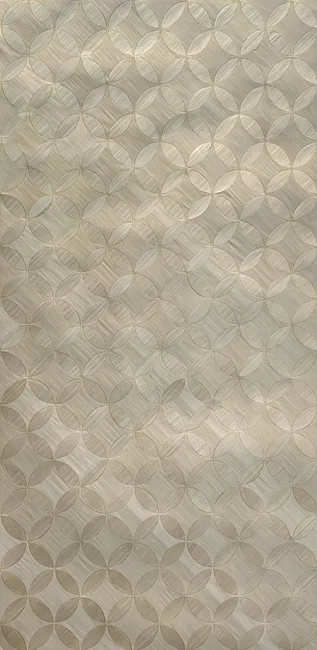
The project: wood as a spatial composition
ALPI presented the installation at Design Miami 2.0 in Miami Beach, Florida, from 2 to 7 December 2025. Its description identifies an organically shaped platform, two rocking ottomans and a partition. Geometric decoration connects the furniture to Kuba textile art, while the overall composition also acknowledges Italian radical design. The disclosed surface material is veneer from the ALPI Legacy collection. [2]
In the project catalogue, the studio describes its intention as translating Kuba patterns into ALPI wood. Vittorio Alpi frames the collaboration as an opportunity to explore unique three-dimensional objects with creative freedom. [3] Read as a design study, the arrangement moves a textile idea through different spatial roles: a platform establishes a shared setting, seating brings the pattern into bodily scale, and a partition gives it a vertical presence. That relationship between object and setting is especially relevant to exhibition and retail design.
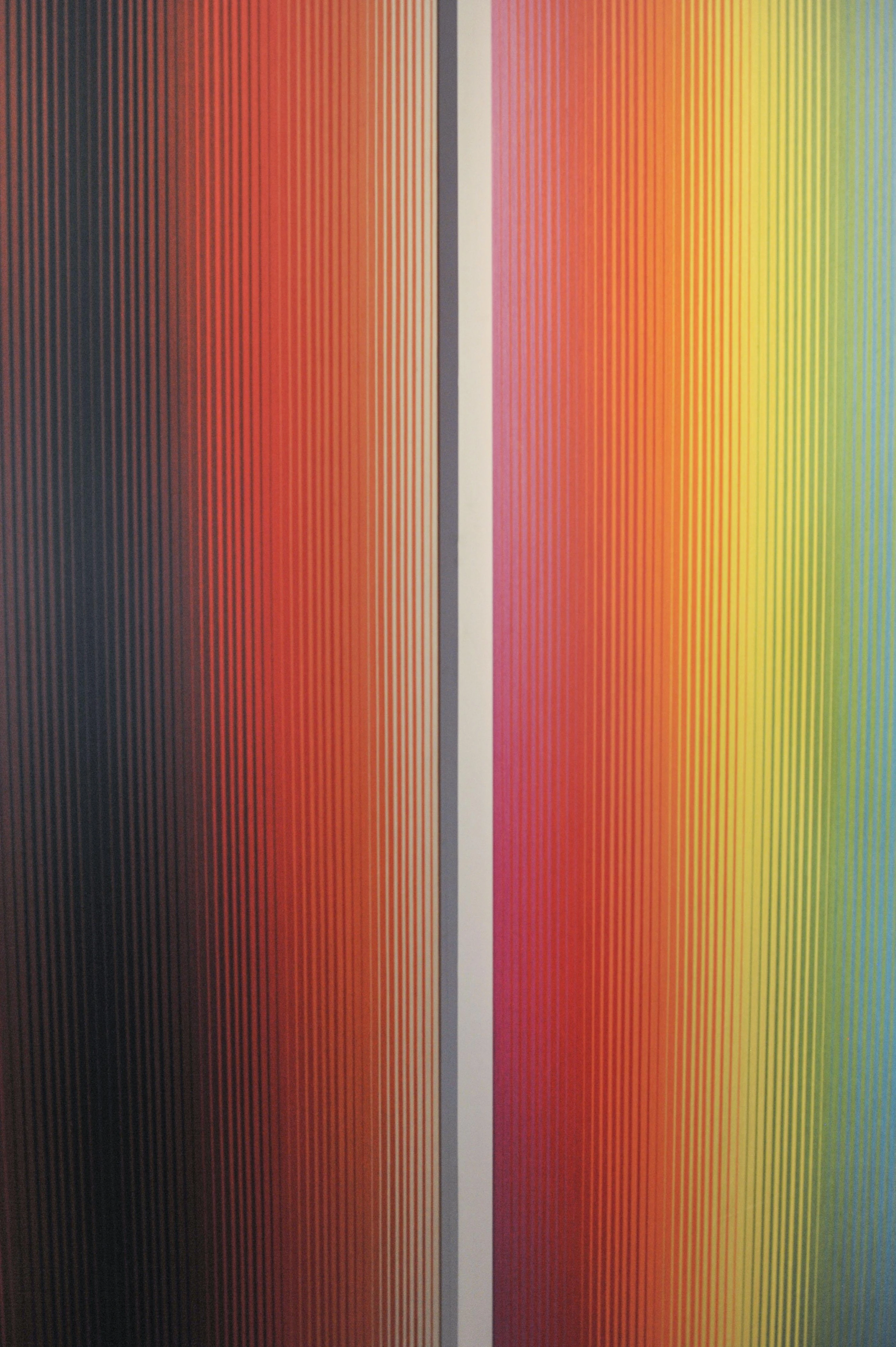
What the textile connection brings to veneer
Kuba cloth has specific makers, techniques and cultural uses. The Metropolitan Museum of Art describes raffia textiles used as clothing and as displayed prestige objects. Its Double Prestige Panel combines geometric structure with an asymmetrical, irregular composition; the museum also explains that many Kuba patterns carry names associated with their creators or other references. [4] This is a richer starting point than treating the tradition as an anonymous library of decorative symbols.
For a new design, begin by identifying the relationship you want to explore: rhythm, alternating density, an interrupted repeat or contrast between small and large elements. Develop a new composition around that relationship and acknowledge its references. A regular grid and a deliberately varied field create different experiences. Neither choice requires copying this installation’s pattern; both invite the designer to think beyond selecting a wood species from a swatch.
How reconstituted wood makes a designed surface
ALPI explains that its veneer production uses natural wood such as poplar, basswood and ayous. Logs are peeled into sheets; these are dyed, glued, arranged and pressed into a block, then sliced again to generate the intended grain and colour. [5] The result is a wood veneer whose appearance is deliberately composed. A species-like appearance in the Legacy collection should therefore not be read as proof that the visible surface was sliced directly from a log of that named exotic species.
Two design decisions operate at different scales. Reconstitution establishes the character of the veneer sheet. The designer’s arrangement of surfaces establishes the larger composition of the object. Veneer itself is a thin wood layer that is generally bonded to a supporting board or form. [6] For a new curved piece, the fabricator must develop the support, joints and veneer layup together. The case sources do not disclose a complete construction specification, so its form should guide a design conversation rather than serve as a fabrication drawing.
From a small motif to a complete object
Consider viewing distance before choosing repeat size. A dense pattern can read as a blended texture across a room and resolve into individual pieces at arm’s length. A larger motif can make the silhouette and orientation of a cabinet more pronounced. Try both on an elevation that includes the surrounding space, then examine a full-size sample. A close-up image alone cannot answer how much visual attention the finished object will demand.
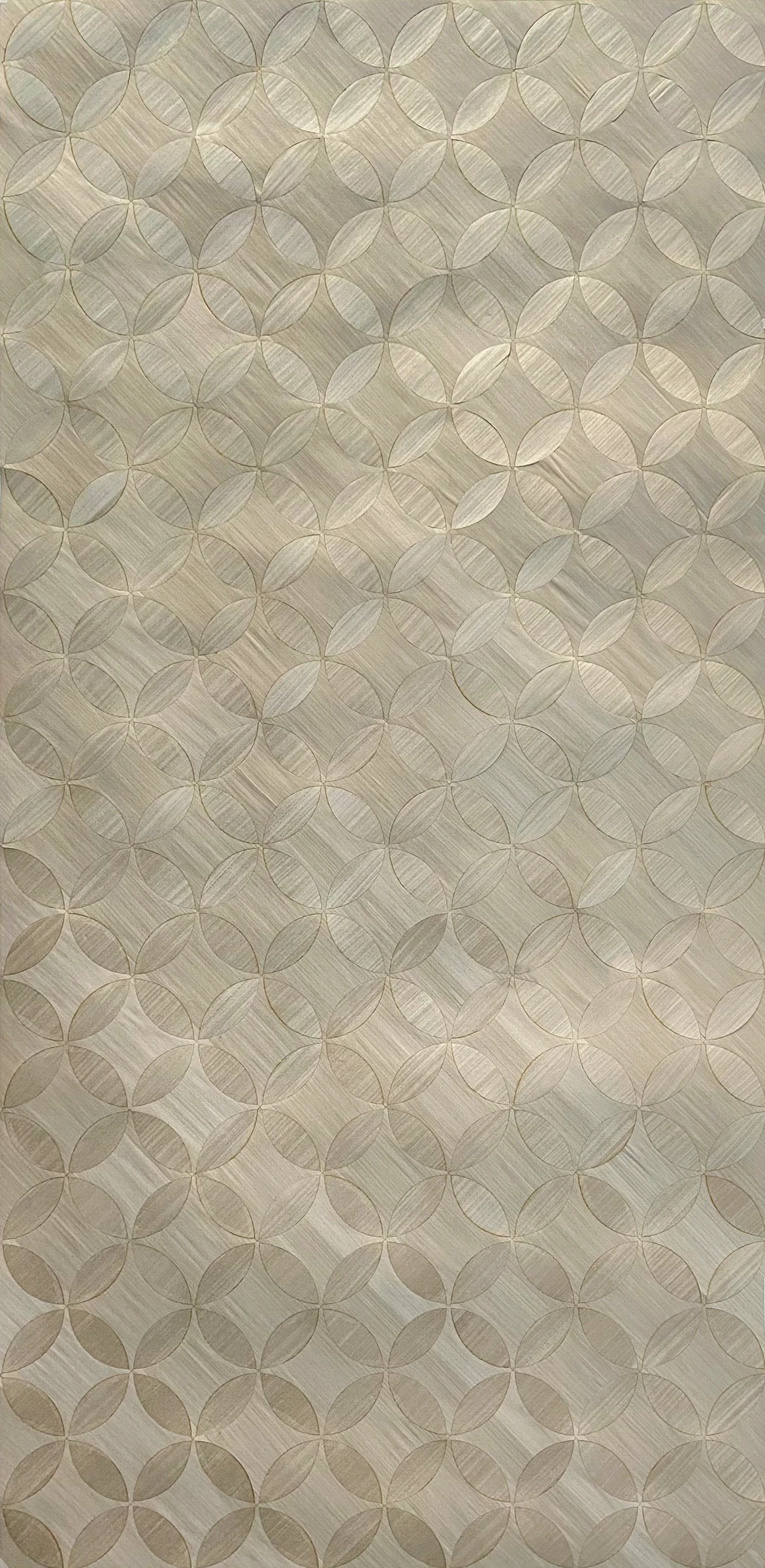
Edges deserve the same attention as the main face. Decide where a repeat begins, where it finishes, and what happens at a drawer gap, corner or change of plane. An intentional border may frame the pattern; a continuous composition may connect adjacent faces. These are design options to develop with the maker. The KOSEE inlay reference shown here demonstrates an independently composed veneer pattern, not a reproduction of the ALPI installation.
Application ideas for boutiques and exhibitions
In a fashion boutique, a patterned veneer surface could define one focal point: a consultation desk, an accessory cabinet or a freestanding screen. Give clothing and merchandise enough quiet background to remain legible. A useful early exercise is to test the same design with both a sparse product display and a dense one. A composition that succeeds in an empty rendering may compete with the collection once the store is stocked.
For an exhibition, consider how visitors encounter a sequence of surfaces. A larger motif can mark an arrival point; a quieter veneer can connect the supporting furniture. Repeating one proportion or colour relationship across different objects may establish continuity without covering every surface in the same pattern. These are proposed applications drawn from the case’s design approach, not additional projects attributed to ALPI or KOSEE.
Finally, examine colour, gloss and grain under the intended lighting, alongside the actual fabrics and neighbouring finishes. View the sample from the entrance and from close range. Ask the furniture maker to include an edge or joint in the mock-up, because a flat swatch leaves that transition unresolved. This is where a material idea becomes a coordinated interior, with the pattern serving the space and the products displayed within it.
Developing a material direction with KOSEE
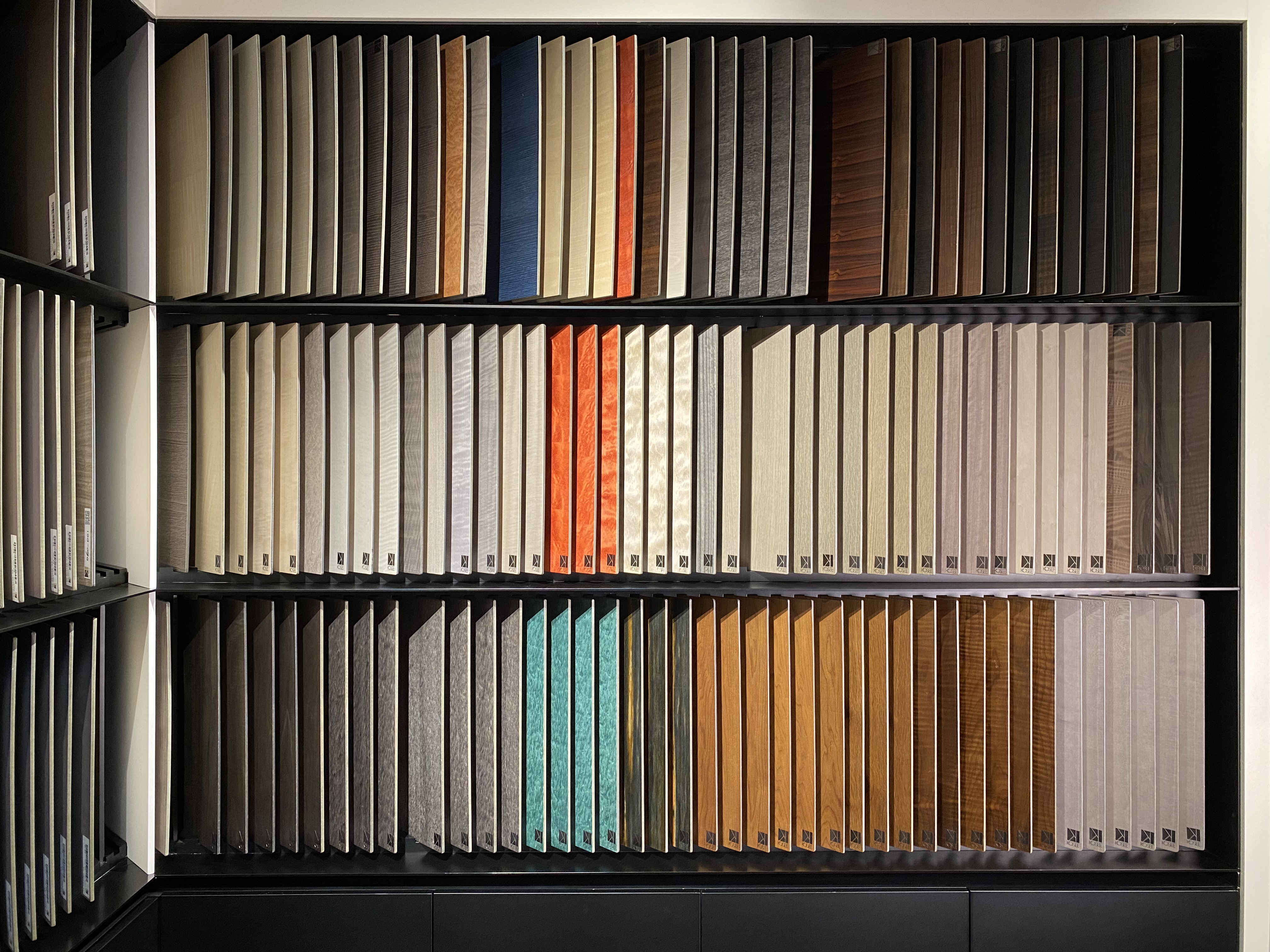
KOSEE’s ALPI page describes support for samples, veneer selection and project material supply in South China through its Dongguan office. ALPI is presented as a distinct partner brand. [7] Separately, KOSEE’s own material range includes natural, dyed, smoked, inlay and 3D embossed veneers, with colour and pattern development among its published capabilities. [8][9] This provides different starting points for a brief: an ALPI reference, an expressive natural grain or a bespoke decorative arrangement.
To begin a discussion, share the intended object, dimensions, viewing distance, preferred palette and surrounding materials. Specify whether you are asking about an ALPI collection or KOSEE’s own veneer range. KOSEE can then review suitable sample references and the project requirements. The Lost Cloth Object remains a documented collaboration between ALPI and Stephen Burks Man Made; the invitation here is to develop a material direction for your own design.
Choose a sample from this article
Explore KOSEE materials and samples
ALPI material support in South China
Browse KOSEE catalogs and material resources
Sources
- Stephen Burks Man Made: The Lost Cloth Object
- ALPI: The Lost Cloth Object
- ALPI / Stephen Burks Man Made: Project catalogue
- The Met: Double Prestige Panel, Kuba artist
- ALPI: Company Profile, 2026
- TVAA: What is veneer?
- KOSEE: ALPI in South China
- KOSEE: Materials
- KOSEE: Capabilities
- KOSEE: Full Panel Gallery