Material Notes / Species and Origins
Birdseye Maple Veneer at the Jewellery Counter
Place a ring on an ivory-coloured jewellery tray lined with birdseye maple veneer. From above, the small marks might echo the setting of the stone. Step back to the other side of the counter and the same tray may read as a pale field. For the designer, the useful choice comes down to scale. Should a customer notice the figure on approaching the display, or discover it only when the salesperson brings the tray closer?
What makes an eye in maple wood?
Birdseye describes a figure in the wood. In microscopic sections of sugar maple, researchers show vessels and fibres changing direction around a local distortion. Cut across a series of those disturbances and the surface shows small, separate features within a larger sweep of grain. That distinction matters on a narrow tray rim. The underlying grain can run almost uninterrupted around the piece while the eyes enter and leave the visible strip. [1]
Light plays a part in how those features read. Turn a real sample slowly while keeping the lamp and your head still. Watch a single eye and then the field beside it. Does the eye hold a dark outline throughout the turn, or does it become easiest to see at one angle? Repeat the observation with the sample flat on the counter. A vertically mounted sample in a showroom can give a different impression of the same face.
Where sugar maple grows
Sugar maple (Acer saccharum) grows across part of eastern North America. Its native range reaches from southeastern Manitoba across parts of Ontario and Quebec to the Atlantic provinces, and extends into the United States, including the Great Lakes region, New England and parts of the Appalachians. The US Forest Service maps the distribution of the tree. A birdseye veneer sample adds a different piece of information: it shows the figure on one selected face. [2]
Keep those facts on separate lines in a material schedule. A useful entry might read “dyed birdseye maple, ivory, horizontal tray insert.” If the brief calls for timber harvested in a particular country, add a field for harvest origin and request documentation for the proposed lot. The colour reference, place of manufacture and source of the log each answer a different question. Only record a country against the lot once its paperwork identifies it.
An ivory tray at hand distance
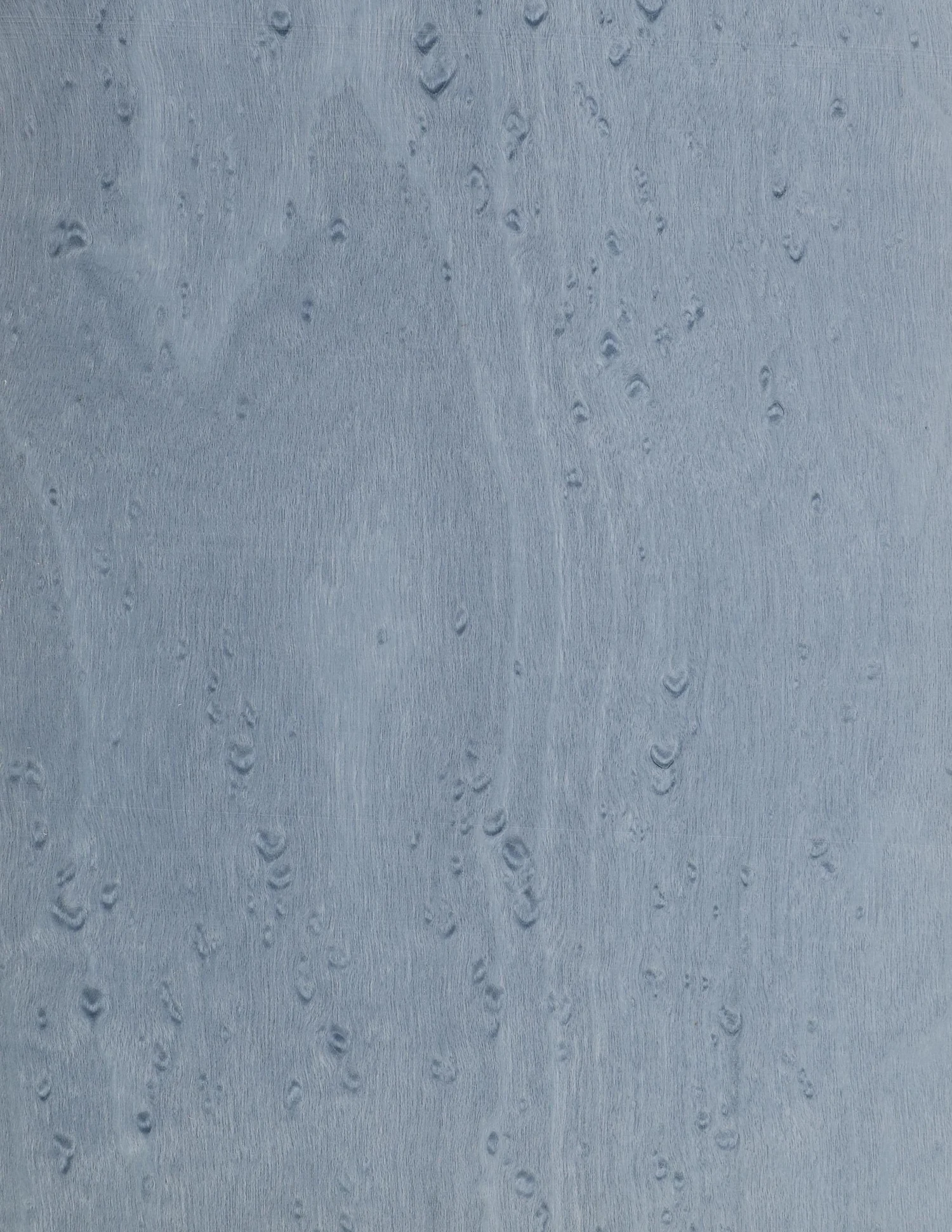
KOSEE lists Ivory 006-003 as a rotary-cut dyed birdseye maple veneer. Rotary cutting presents a broad face as the log turns against a knife. In the product photograph, small pale marks sit against an ivory ground, with a busier patch toward the bottom. The photograph lets you choose what to test first. Place a paper window the size of the tray over a scaled print and shift it from the quiet area into that patch. [3]
Now add a ring, a price card and the lip of the tray to the drawing. The card may cover the one patch the designer chose the sheet for. A deep lip can cast enough shadow to hide the figure around the perimeter. Move the objects as a sales associate would, then mark the area that stays in view. It is usually a smaller and more irregular shape than the rectangle sent to the joiner.
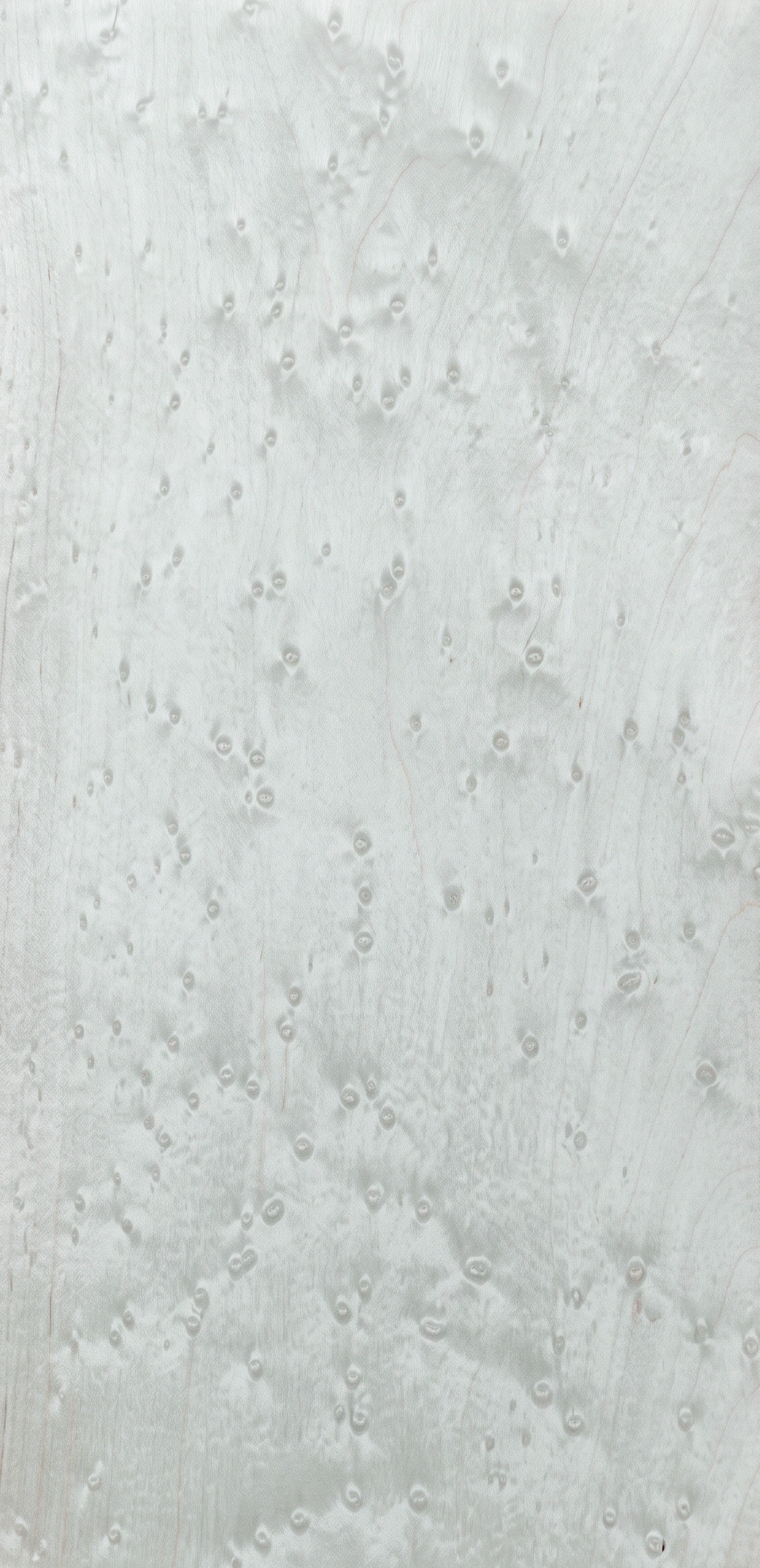
A blue-grey back panel behind the same tray
The Blue Grey reference 006-006 gives a second starting point. In its photograph, groups of eyes sit on either side of a longer sweep of grain. Imagine using it upright behind the tray. The broad sweep would be visible above the jewellery even when individual eyes become hard to pick out. To judge the pairing, stand the blue-grey finish vertically and lay the ivory sample below it. Looking down at two samples on a desk removes precisely the change of plane that the display introduces. [4]
For a row of trays, agree on a visible range of figure before cutting. Set three proposed faces side by side and temporarily cover the parts hidden by the rims. A small cluster near the edge can look quite prominent when its neighbour has a clear patch at the same height. Number the layouts while they are together. That simple record helps the shop keep the approved sequence when individual inserts leave the bench for finishing.
For a new display, share the dimensions of the visible opening, a photograph of the merchandise and the viewing distance with KOSEE when requesting samples. Compare the proposed finish under the display lights with the glass in place. Record the colour reference and photograph the approved cut window alongside the finished sample. The next person opening the job file can then see which portion of the sheet earned approval.