Material Notes / Veneer Craft
Why Book-Matched Veneer Can Look Light and Dark
A cabinet front can look beautifully symmetrical and still appear striped. The grain meets neatly at each joint, yet one veneer leaf looks lighter than its neighbour. Before changing the colour specification, separate two questions: how were the leaves assembled, and how does the finished surface behave in light? This distinction helps a designer explain what is being seen and gives the workshop a useful starting point for a trial. A photograph alone rarely answers both questions.
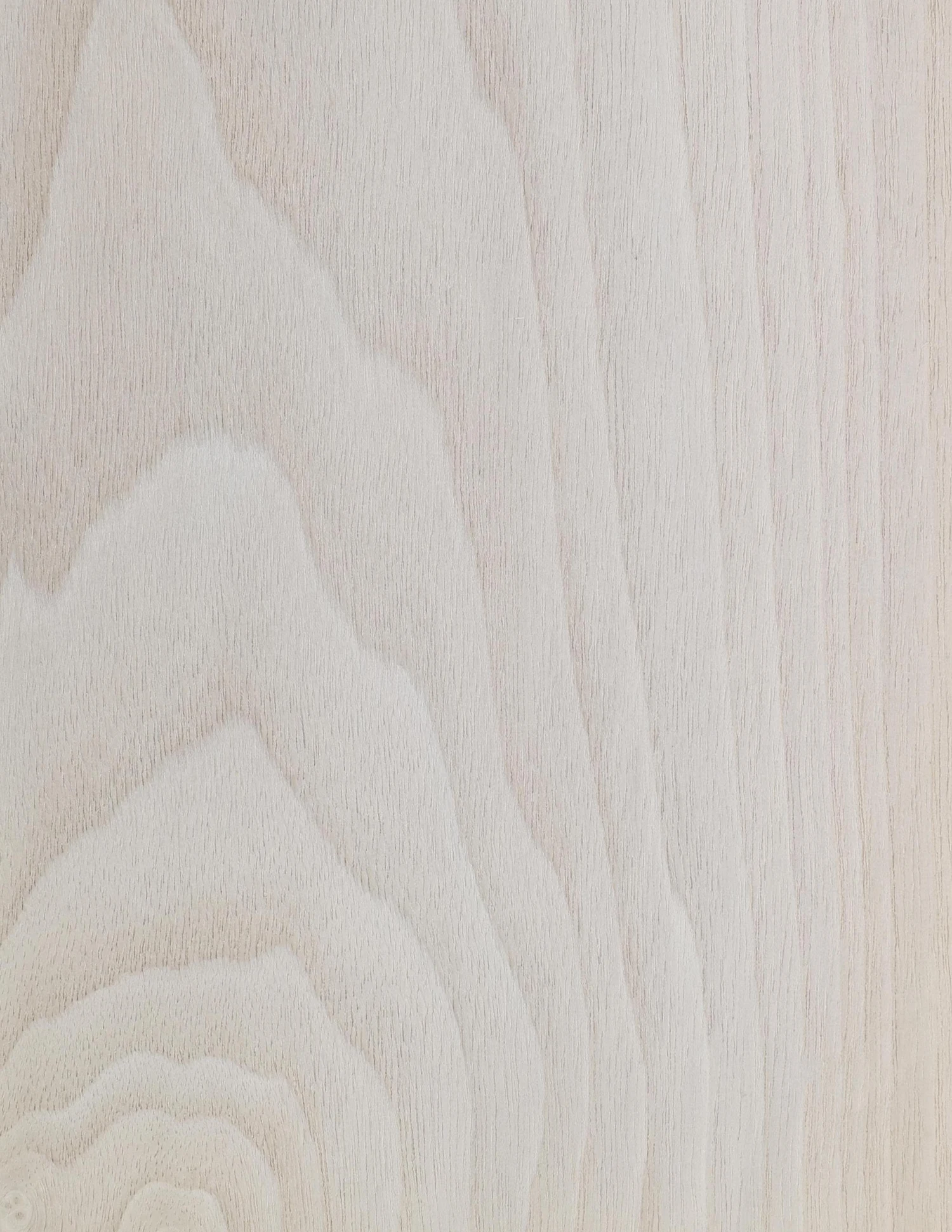
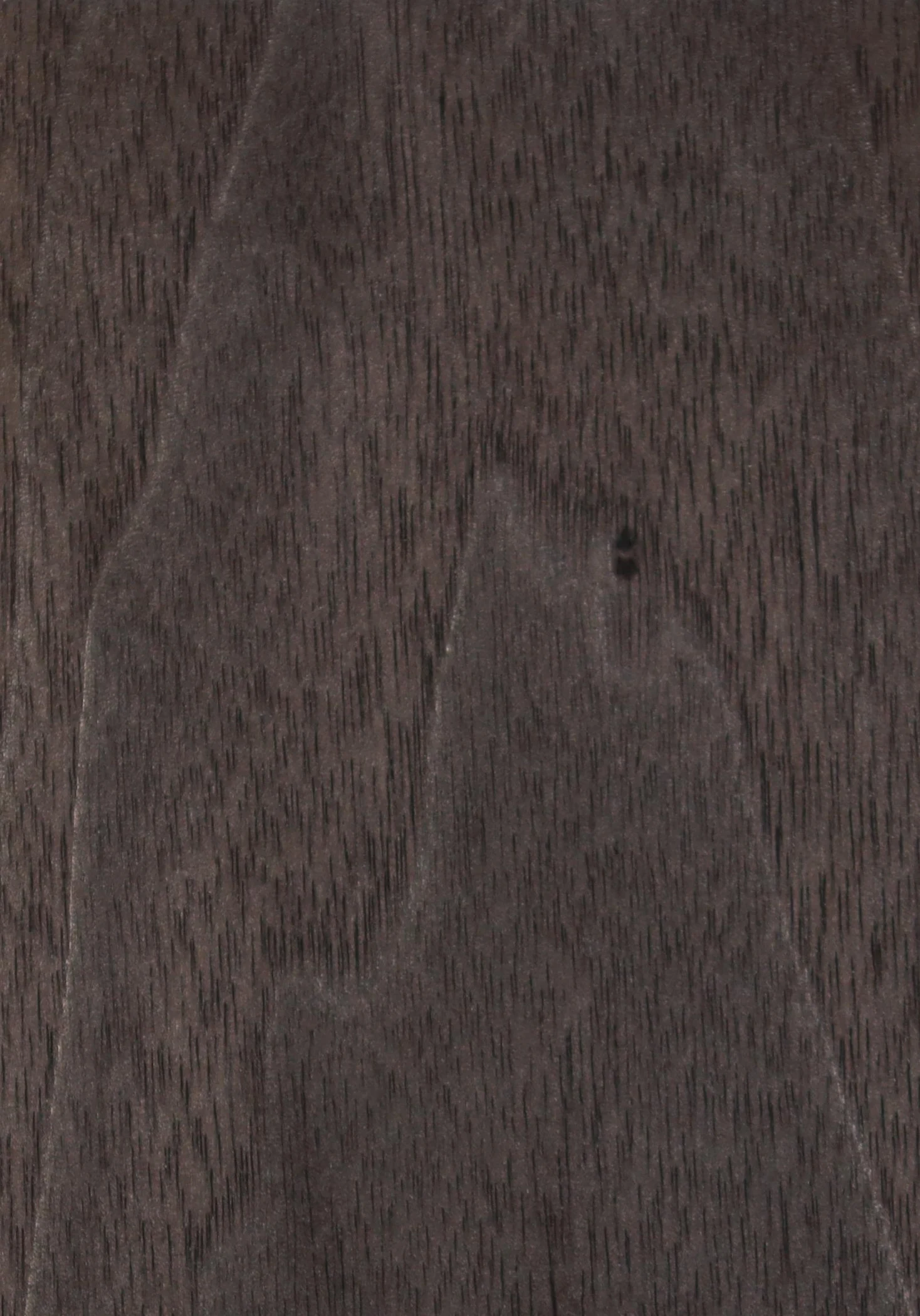
This article explains the barber pole effect in book-matched veneer and proposes a practical comparison for cabinet doors and wall panels. The two KOSEE photographs are material references for selecting a trial face. Neither is a documented example of barber pole, nor a before-and-after finishing test. To evaluate alternating leaves, you need an assembled sample made from the actual veneer under consideration.
What book matching changes
Book matching turns over alternate consecutive veneer leaves, arranging the grain like an opened book. That reversal also alternates the exposed faces. Columbia Forest Products explains that cutting can produce minute lathe checks on the loose side; the opposite face is called the tight side. These surfaces can absorb finishing material differently. The resulting alternating light and dark appearance is commonly called barber pole, and it may become more noticeable after finishing. [1]
Light reflection is another part of the explanation. The Hardwood Plywood Handbook notes that the alternating faces can both take stain and reflect light differently. A symmetrical grain layout therefore does not guarantee identical brightness across every leaf. Keep this relationship separate from the identity of the wood species: naming a veneer walnut or oak does not specify which face is exposed or how a particular finish will look. [2]
Observe the pattern before naming the problem
Start with a simple observation record. Mark the splice lines on a photograph and number the leaves from left to right. Does the light-dark rhythm follow those boundaries repeatedly, or does it appear as an isolated patch? Ask the fabricator to confirm the layup and which faces were exposed. Treat the pattern as a clue to investigate, rather than a diagnosis based on a screen image. Save an unedited photograph alongside the marked version so the original observation remains available.
Next, keep the panel in its intended orientation and view it from the centre, left and right. Repeat under the proposed room lighting. Record which differences become stronger, weaker or remain conspicuous. Keep camera exposure and white balance fixed when documenting the comparison. These observations help the team distinguish a view-dependent impression from a persistent local difference; they do not establish the cause on their own. Ask the finisher to examine the physical sample before agreeing on a remedy.
Book match or slip match: decide what matters
Slip matching keeps consecutive leaves facing the same way as they are placed beside one another. It repeats the figure rather than reversing it at each joint. Columbia describes tight-side-out assembly as a way to reduce the barber pole risk associated with alternating faces. [3] This is a design choice with a visible consequence: the meeting of two arches in a mirrored composition will not be reproduced simply by substituting slip matching.
For a proposed door, sketch both arrangements at the same scale. Show the door edges, splice positions and handle, then decide whether the priority is symmetry or a quieter repeated rhythm. Use the KOSEE Smoked Crown Walnut reference below to identify the arch you would like to preserve. Its darker field is a colour and figure reference only. Do not infer that a dark veneer will hide alternating-face effects, or that a digital mirror of this photograph predicts an assembled panel. [4]
Test the finishing system on the assembled face
If a mirrored composition is essential, involve the finisher before approving the production face. The Hardwood Plywood Handbook discusses surface preparation and approaches such as a wash coat or glue sizing to even the surface response before finishing. [2] These are options to assess with the relevant coating supplier and fabricator, not a universal recipe for every veneer, adhesive and finish combination. Confirm compatibility on a separate trial rather than applying an improvised treatment to installed doors.
Make a comparison plan that changes one decision at a time. If you are comparing layups, keep the intended finish and viewing setup consistent. If you are comparing finishing approaches, retain the same layup and clearly label each treatment. Include several adjacent leaves so that a repeated rhythm can actually be assessed. Photograph the finished trials together, but retain the physical panels: a single selected angle can make an unresolved difference appear less important than it is in the room.
Turn a colour reference into an approval sample
KOSEE Light Pink Grey walnut 016-001 offers a different starting palette, with pale crown grain visible in the photograph. Compare its local grain and background before deciding what the proposed door should emphasise. It is a separate material reference, not the smoked sample after a corrective treatment. KOSEE states that website colours are visual references and final colour is confirmed against a physical sample. Carry the chosen reference into the assembled trial rather than approving the finished panel from the website image. [5, 6]
Record the approved veneer reference, leaf sequence, exposed-face arrangement, finish system and viewing conditions together. Label the front and the intended top of the sample, and retain the approval panel for comparison during fabrication. For a KOSEE sample enquiry, send the intended application, preferred colour reference and whether mirrored grain is essential. Ask which sample format can support the proposed trial. A clear brief makes the next conversation about a visible, testable outcome rather than the ambiguous request for a perfectly uniform piece of natural wood.