
Material Notes / Veneer Craft
How Light Changes Embossed Wood Veneer on Cabinet Doors
A customer approaching a boutique counter sees the cabinet doors almost straight on. The person wrapping a purchase sees the same doors from one end, under a strip of shelf lighting. A charcoal finish that looks quiet from the aisle can show a lively pattern from the side. When a designer describes embossed wood veneer as subtle, the first practical question is where the viewer and the light will be.
A useful way to settle that question is to build one corner of the counter. Include a pair of doors, the joint between them and the lip of the shelf above. A small mock-up like this lets the woodworker and lighting designer see which parts of the pattern belong to the material and which appear only when a fixture is switched on. It also gives the client a specific view to approve.
What the press puts into the wood
KOSEE describes its embossed collection as layers of real wood veneer hot-pressed into a raised profile in Guangdong, China. Once a surface has this relief, the outline of a ridge, the grain running through it and its apparent colour become three separate design decisions. A ridge has a position on the sheet even when it casts little visible shadow. That position matters if it ends at a door joint or passes behind a pull. [1]
Draw a section through the shelf, the door face and the proposed light. A shelf nose can shield the upper portion of the door while leaving the lower portion exposed. If a customer is meant to notice texture at hand height, mark that height on the drawing. The team can then test whether light reaches the intended area before drawing conclusions about the finish.
Change the light before changing the sample
ERCO illustrates a simple optical effect in its discussion of grazing light on textured walls. Light arriving close to the plane of a textured surface brings out small changes in height through highlights and shadows. The same principle can be explored on an interior sample with an adjustable lamp. The distance and aiming angle for a cabinet depend on its geometry, the fixture and the finish. [2]
Begin with the sample upright and the surrounding room light on. Add the proposed display light from above, then move the light to one side while keeping the sample fixed. Finally, restore the original light and turn the sample a quarter turn. Make a note after each change. Moving the lamp and rotating the sheet at the same time makes it difficult to tell what produced a stronger line.
If the counter has a glass display case, put a piece of that glass on the trial as well. From the sales side, a bright reflection may pass over the wood at precisely the height where the drawing shows a band of texture. Stepping to the opposite end of the counter is a quick way to discover whether that reflection moves with the observer.
A close-set pattern on a wide door
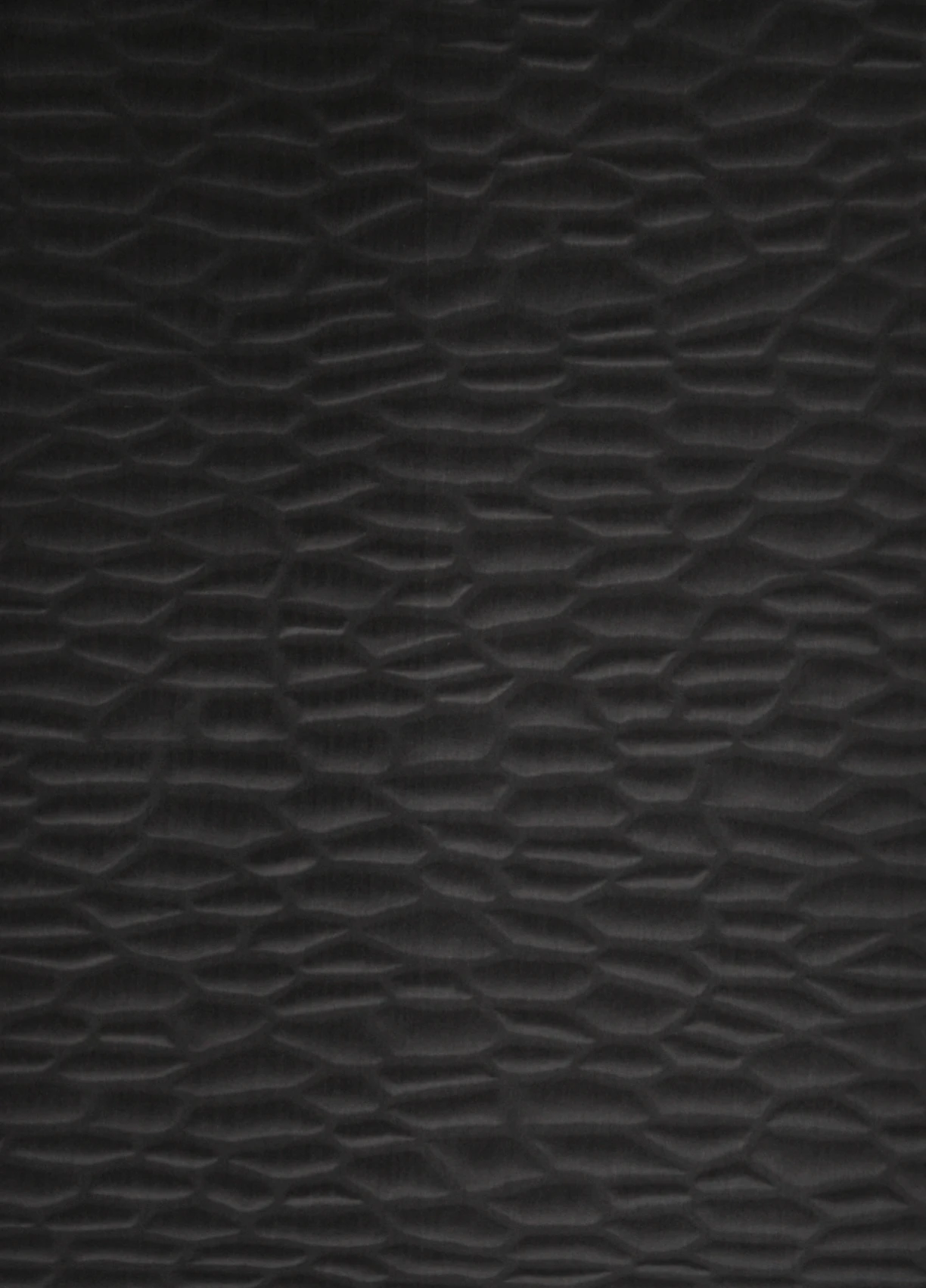
In KOSEE’s photograph of reference A01-021-001, short rippling marks travel across a dark field. Their ends overlap visually, and the pattern changes direction within the frame. Look at one small area and the individual marks stand out. Step back and they begin to read as a continuous surface. The photograph is useful for selecting this pattern to test. For the actual size and depth of the marks, use the physical reference. [3]
For a broad counter front, place the sample behind a cut-out representing the handle backplate. A bright metal plate can draw attention away from the short marks but make the shadows along its own edge conspicuous. Ask someone to approach the mock-up as they would the sales counter. Note the point at which the handle becomes recognizable, then the point at which the relief becomes legible. The intended order depends on what the customer needs to find first.
Keep the hardware loose for one more trial. Shift it half its width and look at the marks that reappear beneath its former position. If the most noticeable change is a sharp shadow from the metal, try a different projection of the pull before changing the veneer. If a small shift cuts through the centre of a prominent wave, consider moving the hardware on the drawing while the design is still flexible.
A horizontal texture across a pair of fronts
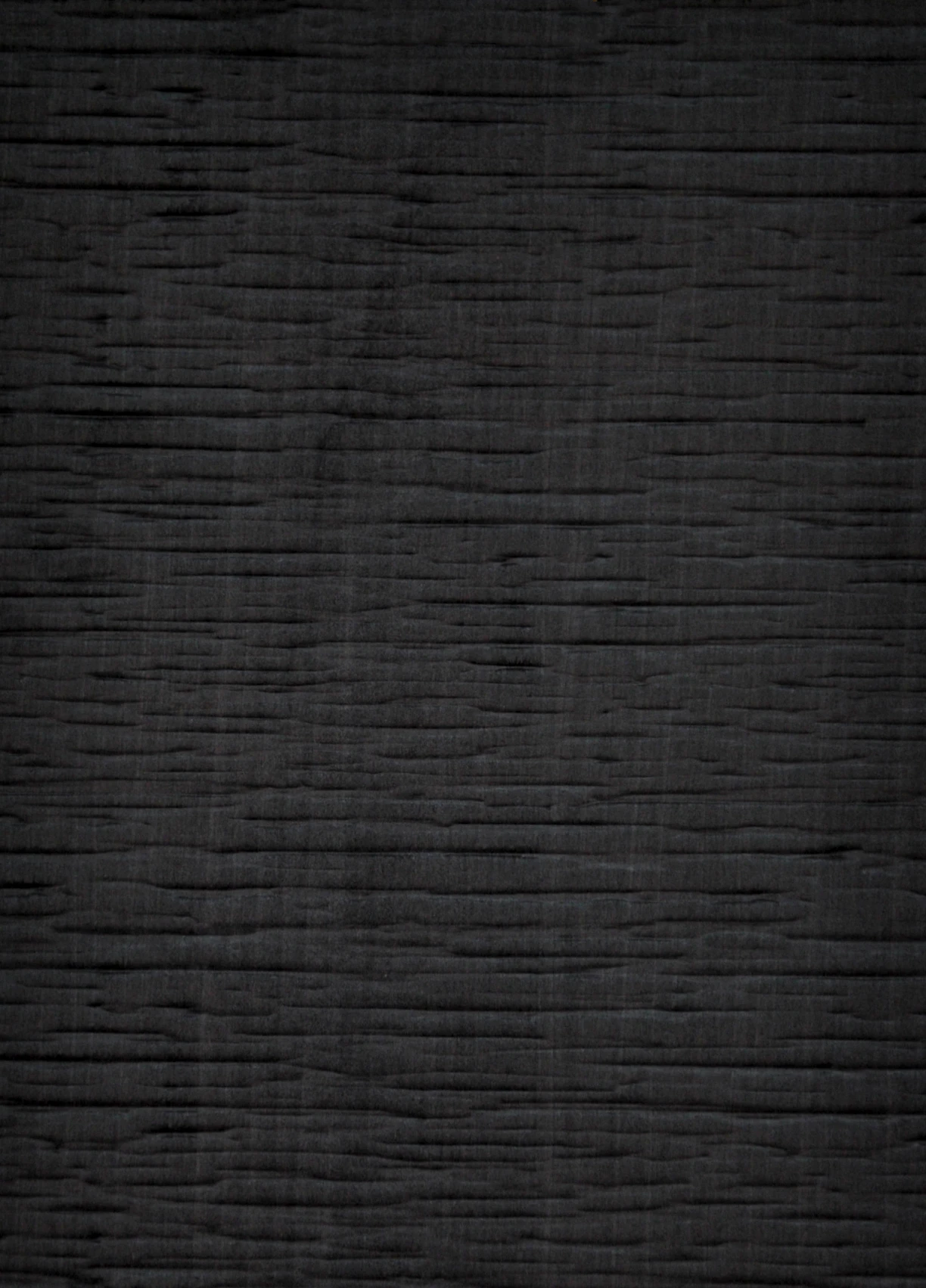
KOSEE reference B02-021-001 offers a different comparison. In the official image, slender horizontal marks of varying lengths cross a dark surface. Try a light from the top and then from the left. Follow one of the longer marks towards the edge of the sheet. Which lighting position makes its length easiest to see? That observation is more informative for a pair of doors than simply choosing the sample that appears darkest on screen. [4]
Close the two trial doors and introduce the intended gap. A pronounced horizontal mark that stops just above its neighbour can make a level pair of doors look crooked. Lay a straightedge across the tops to distinguish the alignment of the joinery from the alignment of the marks. The remedy might be to move the face layout slightly, or to choose a quieter part of the pattern at the meeting edges. That decision is much easier before the faces have been cut.
Keep one corner as the finish reference
Ask the fabricator to include the proposed core, edge detail and coating in the trial. Inspect the exposed end of the relief beside the handle and at the return. Look once with the doors closed and again with one open, when the edge is more visible. KOSEE asks customers to review the intended substrate, adhesive and pressing method for the selected reference. Agree those details with the fabricator before treating a loose piece of veneer as the approved cabinet finish. [1]
Label the back of the approved corner with the full veneer reference, an arrow pointing towards the top of the door and the light position used for the review. Keep one photograph from the aisle and another from the side where staff will stand. For a KOSEE sample enquiry, send the reference, the door dimensions and the shelf section. Those three details allow the next discussion to focus on the surface people will see when the counter is in use.